What are the structural properties of square tubes
Information summary:Square steel tube (square steel tube) is a commonly used profile in the fields of mechanical manufacturing, steel structure, etc. It is divided into welded square tube and seamless square tube according to the forming process. The core structural performance revolves around three dimensions: mechanical performance, geometric stability, and adaptability. It has the characteristics of high strength,
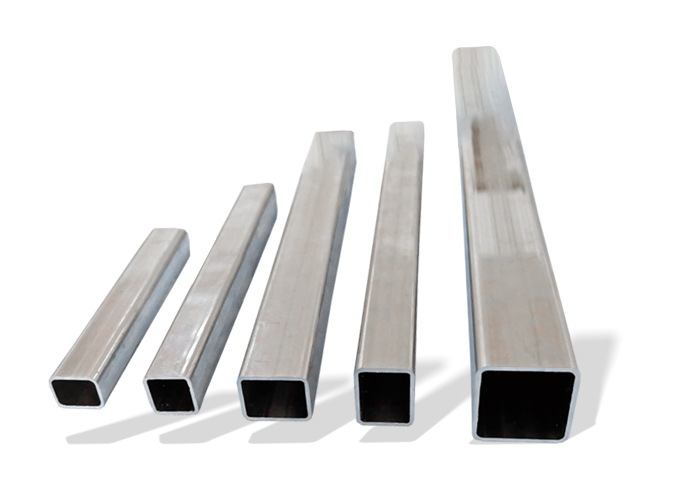
Square steel tube (square steel tube) is a commonly used profile in the fields of mechanical manufacturing, steel structure, etc. It is divided into welded square tube and seamless square tube according to the forming process. The core structural performance revolves around three dimensions: mechanical performance, geometric stability, and adaptability. It has the characteristics of high strength, compact structure, and flexible use. The specific performance and details are as follows:
1�����、 Core mechanical performance (bearing core advantages)
1. Excellent compressive and bending resistance
The cross-section of the square tube is a regular square, and the stress distribution is uniform when subjected to force. Compared with circular tubes and flat steel of the same specification, it has stronger resistance to longitudinal compression and transverse bending. Under the same material and wall thickness, square tubes have a higher flexural modulus and are less prone to deformation when subjected to static loads (such as equipment supports and building beams) and dynamic loads (such as conveyor machinery frames), making them suitable for various load-bearing scenarios. Adaptation scenarios: mechanical load-bearing frames, steel structure columns, equipment base supports, etc.
2. Good torsional performance
The angular structure of square cross-section can effectively disperse torsional forces, with better torsional stiffness than circular pipes. It has stronger stability under torsional loads, avoiding torsional deformation or fracture, especially suitable for transmission and connection components that require anti torsion. Adaptation scenarios: mechanical transmission shaft sleeve, automation equipment guide rail base, engineering robot arm connectors, etc.
3. Uniform wall thickness and strong load-bearing consistency
The deviation control of qualified square tube wall thickness is strict (national standard deviation ≤± 5%), the overall wall thickness is uniform, there are no local stress concentration points when subjected to force, and the bearing stability far exceeds that of irregular profiles, reducing the risk of fracture caused by local weakness and adapting to high-precision and high reliability mechanical manufacturing needs. Adaptation scenarios: precision mechanical components, equipment load-bearing structures, security equipment brackets, etc.
4. Wide material adaptability and customizable performance
Square tubes can be made of various materials such as carbon steel, stainless steel, aluminum alloy, alloy steel, etc. Different materials correspond to different mechanical properties, and can be customized according to needs:
Carbon steel square tube: high strength, low cost, tensile strength of 300-600MPa, suitable for conventional load-bearing scenarios;
Stainless steel square tube: corrosion-resistant+high-strength, tensile strength ≥ 520MPa, suitable for chemical and outdoor mechanical scenes;
Aluminum alloy square tube: lightweight and high-strength, with a density only one-third of carbon steel, and a tensile strength of 200-400MPa, suitable for lightweight equipment.
2�、 Structural geometric performance (core advantages of installation and adaptation)
1. Regular cross-section, strong connection adaptability
The square section has distinct edges and corners, and when connected with other profiles (flat steel, angle steel, plate), it fits tightly. It can be directly fixed by welding, bolt connection, riveting, etc., without the need for additional processing of the fitting surface. The installation efficiency is high, and the connection firmness is better than that of irregular section profiles such as round pipes. Core advantages: Reduce processing steps, lower assembly costs, and adapt to standardized batch assembly.
2. Compact structure and high space utilization rate
The square tube has a regular square cross-section and no gaps when arranged and stacked, which can utilize installation space and save 20% -30% of installation space compared to circular tubes. It is suitable for building internal structures of mechanical equipment with limited space. Adaptation scenarios: internal frames of small devices, electrical control cabinet skeletons, precision instrument support structures, etc.
3. High geometric accuracy and good molding stability
The side length deviation, diagonal deviation, and straightness of the finished square tube meet the national standard requirements (side length deviation ≤ ± 0.5mm, diagonal deviation ≤ 1mm), and the cross-section is flat without warping. It is not easily deformed during subsequent cutting, punching, bending, and other processing, ensuring processing accuracy and adapting to high-precision mechanical manufacturing needs.
3、 Practical structural performance (core advantage of scene adaptation)
1. Lightweight structure, reducing weight and increasing efficiency
The square tube is a hollow structure, which can reduce its weight by 60% -70% compared to solid square steel of the same cross-section. However, its load-bearing performance is basically the same, achieving "lightweight and high-strength". It can reduce the overall weight of the equipment while ensuring its load-bearing capacity, and is suitable for the trend of lightweight mechanical design.
Adaptation scenarios: new energy equipment racks, logistics conveying equipment, aerospace supporting lightweight machinery, etc.
2. Outstanding corrosion resistance and durability
The surface can be treated with processes such as galvanizing, spraying, and passivation to form a protective layer, which enhances the ability to resist rust and wear. Its service life can reach 10-20 years in harsh environments such as humidity, acid and alkali, and outdoors, far exceeding untreated profiles and suitable for complex working conditions. Adaptation scenarios: outdoor engineering machinery, chemical machinery, marine supporting machinery, etc.
3. Strong processing flexibility, suitable for customized needs
Square tubes can be cut, punched, bent, welded, and deeply processed as needed, and can be processed into irregular structural parts without the need for complex molds. They are suitable for non-standard customization requirements in mechanical manufacturing, and the structural stability after processing is not affected, while also considering flexibility and reliability. Adaptation scenarios: non-standard mechanical equipment accessories, customized brackets, special mechanical structural components, etc.


 Address: No. 15, Liuzhou Road, Yushan High-tech Industrial Park, Changshu
 E-email:info@sinupower.com



 CN
CN EN
EN  微信號:
微信號:


 Wechat
 Visit us
 Please Call